
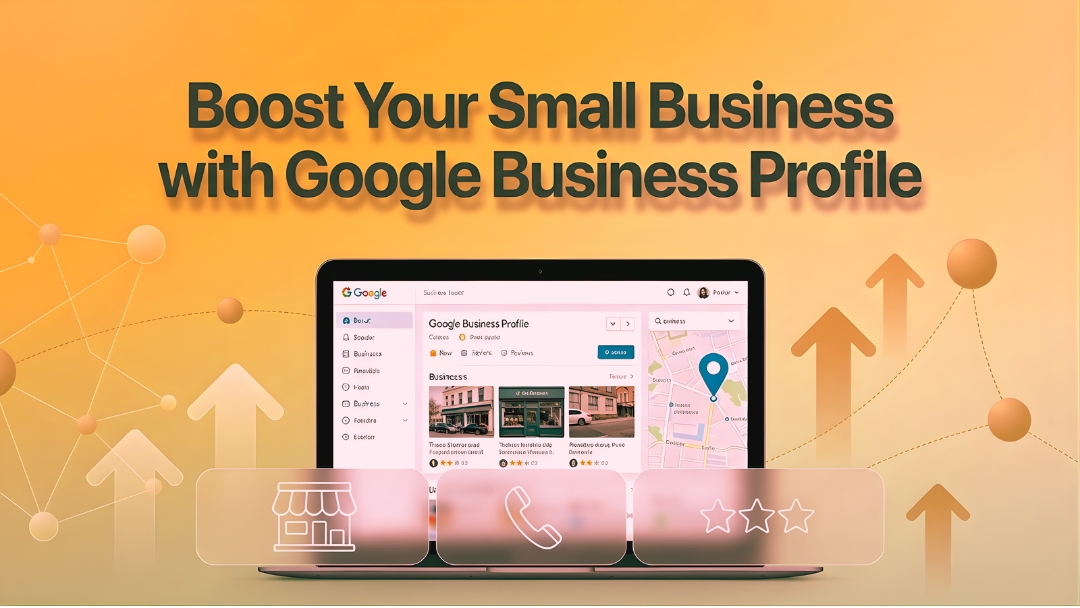
Why Every Small Business Needs a Google Business Profile
Why Every Small Business Needs a Google Business Profile
If you run a small but growing business, you already know how important it is to be visible, trusted, and easy to contact. Your customers might discover you at events, markets, or through word of mouth, but sooner or later they will search for you online. That moment is where your Google Business Profile can make all the difference.
A Google Business Profile (formerly Google My Business) is a free tool that helps your business appear in Google Search and Google Maps when people are looking for products or services like yours. It gives you control over how your business appears, helps you reach new customers, and supports your growth from a small operation to a thriving enterprise.
Take control of how your business appears online
When someone searches for your business, Google often pulls information from different places. Without a verified profile, this information can be incomplete, out of date, or simply wrong. That can cost you enquiries and sales.
With a Google Business Profile, you can:
- Add and update your business name and description
- List your opening hours, including holidays or seasonal changes
- Share your website link, phone number, and key contact details
- Upload photos of your products, premises, or stand
This gives you control over the first impression people get when they find you in Google. Instead of a half-empty listing, they see a clear, professional profile that reflects who you are and what you offer.
Get found by local customers and new markets
Most small businesses serve a local area, but local does not have to mean limited. Many customers search using terms like “near me” or “local” when they are ready to buy. A well-optimised Google Business Profile helps you appear in those local search results and on Google Maps.
For example, if someone types “handmade gifts near me” or “local artisan food”, your business has a much better chance of appearing when your profile:
- Includes accurate address or service area information
- Uses relevant keywords in the business description
- Features high-quality photos and up-to-date details
This is especially powerful for small, growing businesses that attend markets, fairs, or Cottage Industry events. You are not just discovered at the event itself – you remain discoverable long after, by people in your area and by those planning a visit.
Build trust and credibility with your audience
Trust is everything for a small business. Customers want to know you are real, reliable, and easy to contact. A complete Google Business Profile helps build that trust before they even speak to you.
By adding:
- A clear logo and brand image
- Genuine photos of your products, stall, studio, or shop
- A well-written description of who you are and what you do
you create a digital shopfront that feels personal and professional. When people see a polished, verified profile, they are far more likely to click through, call you, or visit in person.
Make it simple for people to contact you
Small businesses thrive when it is easy for customers to get in touch. Your Google Business Profile brings together your key contact options in one place, so people do not have to hunt around.
From your profile, customers can:
- Tap to call you directly from their phone
- Click through to your website or online shop
- Get directions to your location via Google Maps
- Ask questions via the Q&A feature
These small details remove friction. If someone is deciding between you and another business, the one that makes it easiest to get in touch often wins.
Use reviews to encourage more sales
Online reviews are now one of the most influential factors in buying decisions. For a small, growing business, they are the digital version of word-of-mouth recommendations.
With a Google Business Profile you can:
- Invite happy customers to leave a review
- Respond to reviews and show you care about feedback
- Build a visible track record of good service
Potential customers can see real comments from real people, which reassures them that you deliver on your promises. Over time, a steady flow of positive reviews can significantly boost your reputation and your search visibility.
How to set up your Google Business Profile
Setting up a Google Business Profile is straightforward, and once it is in place, it becomes a powerful asset for your small business. Here is a simple step-by-step guide:
- Visit the Google Business site and sign in with your Google account.
- Enter your business name and choose the most relevant business category.
- Add your location if customers visit you in person, or define your service area if you travel to them.
- Include your phone number, website address, and any key contact details.
- Upload photos that represent your business well.
- Request verification (this is usually done by post, email, or phone, depending on what Google offers you).
Once verified, you can log in at any time to update your details, add new photos, share posts, or respond to reviews. Treat it as a living part of your marketing, not a “set and forget” task.
For small businesses looking to grow, being visible, credible, and easy to contact is essential. A Google Business Profile gives you those building blocks without needing a big budget or complicated technology. When you combine that profile with your existing relationship with CIA and automatic inclusion in the BCIA community, you are in a strong position to turn online searches into loyal customers and long-term growth.
If you have not yet created or fully updated your Google Business Profile, now is the perfect time. Make sure your business can be found, trusted, and contacted – and let your online presence support the next stage of your growth journey.