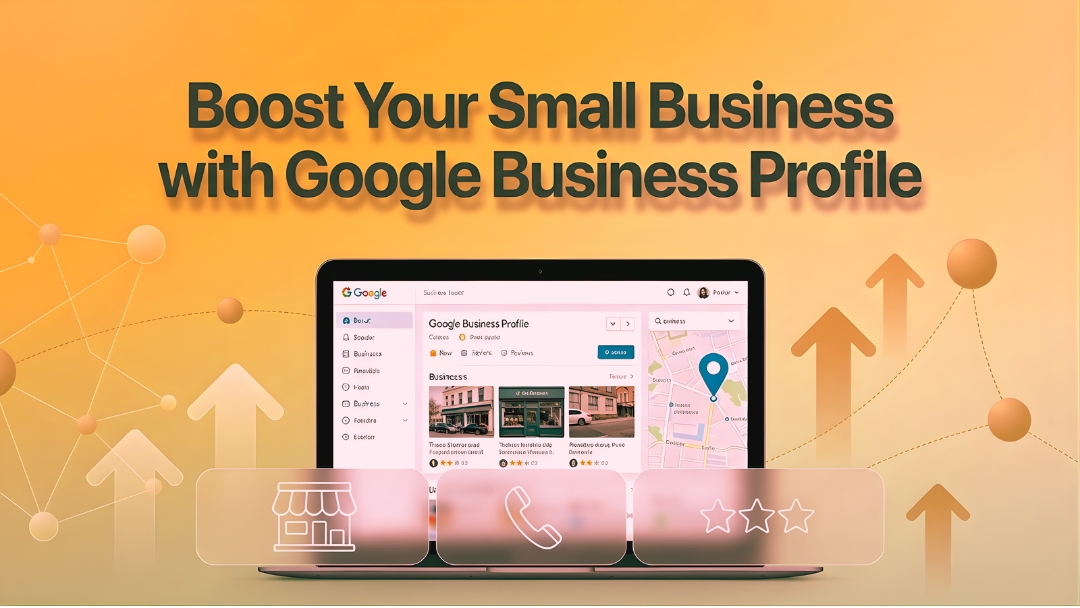
by georgecornelius | 22 05 26 | Increase Sales Results, Sales Awareness, Sales Channels
Why Every Small Business Needs a Google Business Profile
If you run a small but growing business, you already know how important it is to be visible, trusted, and easy to contact. Your customers might discover you at events, markets, or through word of mouth, but sooner or later they will search for you online. That moment is where your Google Business Profile can make all the difference.
A Google Business Profile (formerly Google My Business) is a free tool that helps your business appear in Google Search and Google Maps when people are looking for products or services like yours. It gives you control over how your business appears, helps you reach new customers, and supports your growth from a small operation to a thriving enterprise.
Take control of how your business appears online
When someone searches for your business, Google often pulls information from different places. Without a verified profile, this information can be incomplete, out of date, or simply wrong. That can cost you enquiries and sales.
With a Google Business Profile, you can:
- Add and update your business name and description
- List your opening hours, including holidays or seasonal changes
- Share your website link, phone number, and key contact details
- Upload photos of your products, premises, or stand
This gives you control over the first impression people get when they find you in Google. Instead of a half-empty listing, they see a clear, professional profile that reflects who you are and what you offer.
Get found by local customers and new markets
Most small businesses serve a local area, but local does not have to mean limited. Many customers search using terms like “near me” or “local” when they are ready to buy. A well-optimised Google Business Profile helps you appear in those local search results and on Google Maps.
For example, if someone types “handmade gifts near me” or “local artisan food”, your business has a much better chance of appearing when your profile:
- Includes accurate address or service area information
- Uses relevant keywords in the business description
- Features high-quality photos and up-to-date details
This is especially powerful for small, growing businesses that attend markets, fairs, or Cottage Industry events. You are not just discovered at the event itself – you remain discoverable long after, by people in your area and by those planning a visit.
Build trust and credibility with your audience
Trust is everything for a small business. Customers want to know you are real, reliable, and easy to contact. A complete Google Business Profile helps build that trust before they even speak to you.
By adding:
- A clear logo and brand image
- Genuine photos of your products, stall, studio, or shop
- A well-written description of who you are and what you do
you create a digital shopfront that feels personal and professional. When people see a polished, verified profile, they are far more likely to click through, call you, or visit in person.
Make it simple for people to contact you
Small businesses thrive when it is easy for customers to get in touch. Your Google Business Profile brings together your key contact options in one place, so people do not have to hunt around.
From your profile, customers can:
- Tap to call you directly from their phone
- Click through to your website or online shop
- Get directions to your location via Google Maps
- Ask questions via the Q&A feature
These small details remove friction. If someone is deciding between you and another business, the one that makes it easiest to get in touch often wins.
Use reviews to encourage more sales
Online reviews are now one of the most influential factors in buying decisions. For a small, growing business, they are the digital version of word-of-mouth recommendations.
With a Google Business Profile you can:
- Invite happy customers to leave a review
- Respond to reviews and show you care about feedback
- Build a visible track record of good service
Potential customers can see real comments from real people, which reassures them that you deliver on your promises. Over time, a steady flow of positive reviews can significantly boost your reputation and your search visibility.
How to set up your Google Business Profile
Setting up a Google Business Profile is straightforward, and once it is in place, it becomes a powerful asset for your small business. Here is a simple step-by-step guide:
- Visit the Google Business site and sign in with your Google account.
- Enter your business name and choose the most relevant business category.
- Add your location if customers visit you in person, or define your service area if you travel to them.
- Include your phone number, website address, and any key contact details.
- Upload photos that represent your business well.
- Request verification (this is usually done by post, email, or phone, depending on what Google offers you).
Once verified, you can log in at any time to update your details, add new photos, share posts, or respond to reviews. Treat it as a living part of your marketing, not a “set and forget” task.
For small businesses looking to grow, being visible, credible, and easy to contact is essential. A Google Business Profile gives you those building blocks without needing a big budget or complicated technology. When you combine that profile with your existing relationship with CIA and automatic inclusion in the BCIA community, you are in a strong position to turn online searches into loyal customers and long-term growth.
If you have not yet created or fully updated your Google Business Profile, now is the perfect time. Make sure your business can be found, trusted, and contacted – and let your online presence support the next stage of your growth journey.
by rtenny | 8 05 26 | Increase Sales Results, Social Media
Key Takeaways
| Aspect |
Benefit |
Impact |
| Professional Guidance |
Expert strategy development and execution |
17-point ad recall lift, consistent brand messaging |
| Cost-Effective Targeting |
Lower costs than traditional marketing |
Real-time audience insights, improved ROI |
| Employee Advocacy |
8x higher engagement rates |
20x greater reach than brand posts alone |
| Platform Optimization |
Focus on audience-specific channels |
Enhanced conversions and web traffic |
| Data-Driven Decisions |
Real-time analytics and performance tracking |
Measurable growth in leads and sales |
Social media strategy services aren’t just about posting pretty pictures on Instagram. These specialized offerings help businesses create a solid plan that actually makes sense for their goals. Think of it like having a GPS for your social media – instead of driving around aimlessly, you know exactly where you’re going.
Most small business owners I’ve worked with make the same mistake. They post randomly, hoping something will stick. But here’s the thing – without a proper strategy, you’re basically throwing spaghetti at the wall. Professional services change that completely by developing a cohesive plan that connects your social media efforts to real business results.
What makes these services different from hiring your nephew who’s “good with computers”? Professional strategists focus on long-term tactics like defining clear goals, picking the right platforms for your audience, and creating content calendars that actually drive traffic. They also analyze data constantly, which means your strategy gets better over time instead of staying the same.
The best part? You get Social Media Sales Marketing expertise without having to become an expert yourself. This frees you up to focus on what you do best – running your actual business.
Did you know that 90% of consumers use social media to follow trends? That’s not just teenagers scrolling TikTok – that’s your potential customers making buying decisions based on what they see online. Without a proper strategy, your business is invisible in this massive conversation.
Here’s what I see happening all the time: businesses post inconsistently, their messaging is all over the place, and they wonder why social media “doesn’t work” for them. The reality is that content overload is real, and only brands with consistent, strategic messaging manage to cut through the noise.
Professional strategy services solve this problem by ensuring your brand has a clear voice and identity. When people see your content, they should immediately recognize it’s yours – even without seeing your logo. This builds trust, and trust leads to sales.
The numbers don’t lie either. Real-time data from social platforms gives you insights about your audience that you can’t get anywhere else. This information helps you make better decisions across your entire business, not just your marketing. For small businesses especially, this level of insight used to cost thousands of dollars in market research.
Let me break down the four pillars that separate successful social media strategies from the random posting most businesses do.
Content Planning That Drives Results
Creating an editorial calendar isn’t just about organization – it’s about building momentum. The most successful businesses I work with plan their content weeks or months ahead, mixing educational posts, behind-the-scenes content, and promotional material in a way that feels natural.
User-generated content is pure gold here. When your customers post about your business, it’s like getting free advertising that people actually trust. Employee advocacy works even better – posts shared by your team members get 8 times higher engagement than corporate posts. Why? Because people connect with people, not logos.
Your content calendar should also support your Build Customer Loyalty efforts by consistently providing value to your audience. Mix up your formats too – videos, carousel posts, stories, and regular posts each serve different purposes in your overall strategy.
Audience Targeting That Actually Converts
Generic posting is dead. Modern social media strategy requires laser-focused targeting based on real data, not assumptions. Platform analytics show you exactly who’s engaging with your content – their age, location, interests, and even when they’re most active online.
This information lets you create personalized messaging that speaks directly to your audience’s needs. You can retarget people who visited your website but didn’t buy anything, or create lookalike audiences based on your best customers. The targeting options available today make traditional advertising look like throwing darts blindfolded.
Smart audience targeting also helps with your broader Seven Actions To Grow Your Business strategy by identifying new market segments you might have missed.
Social media strategy isn’t one-size-fits-all. Different businesses need different approaches, and understanding this is crucial for success.
Retail and E-commerce Businesses These companies see the most obvious benefits – direct traffic to their websites and increased sales through promotions and user-generated content. Social media often drives more qualified traffic than SEO or Google Ads because people are already engaged with your brand before they click through.
Healthcare and Service Providers For these businesses, social media builds trust and positions them as thought leaders. Patients and clients can ask questions directly, get quick responses, and see the human side of the business. This is especially important for healthcare, where trust is everything.
Startups and B2B Companies These businesses use social media to network, generate leads, and attract investors or partners. LinkedIn is particularly powerful here for building professional relationships and establishing credibility in the industry.
Professional Services Lawyers, consultants, and similar businesses use social media to distribute their expertise widely. They link to webinars, blog posts, and other valuable content that showcases their knowledge. This approach ties directly into Ai Content Marketing strategies for maximum efficiency.
The key insight here? Brand awareness consistently ranks as the top benefit across all business types, with many companies seeing 17-point lifts in ad recall after implementing proper social media strategies.
Getting your social media strategy right requires following some basic principles that separate successful campaigns from failed ones.
Align Everything With Your Business Goals Every post, every campaign, every piece of content should tie back to specific KPIs like website traffic, leads generated, or sales made. If you can’t connect your social media activity to business results, you’re wasting time and money.
Mix Organic and Paid Content Strategically Organic content builds relationships and showcases your expertise, while paid ads extend your reach to new audiences. The most successful businesses use both together – organic content to engage existing followers, paid ads to find new ones.
Use The Right Tools and Track Everything Scheduling tools like Hootsuite or Buffer help maintain consistency, while UTM tracking codes show which posts actually drive website traffic. Most businesses are shocked to see how much traffic (and revenue) actually comes from social media once they start tracking properly.
Monitor Performance and Adjust Quickly Social media moves fast, so your strategy needs to be flexible. Check your engagement rates weekly, pay attention to which types of content perform best, and don’t be afraid to pivot when something isn’t working.
This systematic approach connects perfectly with Get Your Mind Set In Order – having the right mindset and systems in place makes all the difference.
Actionable Steps You Can Take Today
Ready to improve your social media strategy right now? Here are specific actions you can implement immediately, even if you’re doing everything yourself.
Start With a Simple Audit Look at your current social media presence honestly. Which platforms get the most engagement? What types of posts perform best? Which ones flop completely? This baseline data tells you where to focus your efforts.
Define One or Two Clear Goals Don’t try to do everything at once. Pick one specific goal like “increase website traffic by 20% in the next 3 months” or “generate 10 qualified leads per month through social media.” Clear goals make it easy to measure success.
Create a Weekly Content Calendar Plan out just one week’s worth of content to start. Mix educational posts (tips, how-tos), behind-the-scenes content (your team, your process), and occasional promotional posts (your products or services). This balance keeps your audience engaged without feeling like they’re being constantly sold to.
Test Employee Advocacy Ask your team members to share company posts on their personal accounts. You’ll likely see that 8x engagement boost immediately. People trust recommendations from individuals more than brands.
This foundation work supports your broader business goals and connects naturally with your Sell Or Die With Customer Service efforts by creating more touchpoints with potential customers.
The biggest mistake businesses make with social media is not tracking the right metrics. Likes and followers feel good, but they don’t pay the bills. Real success comes from measuring business impact.
Track Website Traffic From Social Media Use Google Analytics to see how much traffic actually comes from your social media platforms. Most businesses are surprised to discover social media drives more qualified traffic than they thought. Set up UTM codes on all your social media links to get detailed data about which posts and platforms work best.
Monitor Lead Generation Count how many actual leads come from social media each month. This could be contact form submissions, email signups, or phone calls that mention they found you through social media. These leads often convert at higher rates because people are already familiar with your brand.
Calculate Customer Acquisition Costs Compare how much you spend on social media (time, tools, advertising) versus how many new customers you acquire. Social media typically has lower acquisition costs than traditional advertising because of its precise targeting capabilities.
Measure Engagement Quality, Not Just Quantity Comments and shares matter more than likes because they indicate genuine interest. Someone who takes time to comment on your post is much more likely to become a customer than someone who just double-taps and scrolls on.
The businesses that succeed with social media strategy services understand that it’s not about vanity metrics – it’s about building a system that consistently brings in new customers while keeping existing ones engaged. This systematic approach is just as important as 20 Reasons Why You Should Modernise Or Rebuild Your Website In 2023 for your overall digital presence.
Frequently Asked Questions
How much should small businesses spend on social media strategy services? Most small businesses see good results spending between $500-$2000 monthly on professional social media strategy services, depending on their industry and goals. The key is ensuring the service includes strategy development, content creation, and performance tracking – not just posting.
How long does it take to see results from social media strategy services? You’ll typically see initial engagement improvements within 2-4 weeks, but meaningful business results like increased leads or sales usually take 3-6 months. Social media is about building relationships, which takes time to convert into revenue.
Which social media platforms should my business focus on? This depends entirely on where your customers spend time. B2B companies often see better results on LinkedIn, while retail businesses might focus on Instagram and Facebook. The key is being active on 2-3 platforms rather than spreading yourself thin across every platform.
Can I handle social media strategy myself, or do I need professional services? Small businesses can start with basic social media management themselves, but professional services become valuable when you want to scale results or lack time for consistent posting and analysis. If social media isn’t driving measurable business results after 6 months of regular posting, it’s probably time to get professional help.
How do I know if my social media strategy is working? Focus on business metrics, not just social media metrics. Track website traffic from social media, leads generated, and actual sales attributed to your social media efforts. If these numbers are growing month over month, your strategy is working.

by georgecornelius | 28 04 26 | Ai, Increase Sales Results
Marketing automation is one of the most powerful tools available to modern businesses.
It allows businesses to automate repetitive marketing tasks while maintaining regular communication with customers.
This saves time and improves efficiency.
What is Marketing Automation?
Marketing automation uses software and AI tools to automatically perform marketing tasks.
Examples include:
- sending email sequences
- scheduling social media posts
- capturing leads from websites
- sending follow-up emails
- tracking customer behaviour
How Automation Saves Time
Without automation, businesses must manually send emails, respond to enquiries, and track marketing results.
Automation tools handle these processes automatically.
This allows business owners to focus on strategy and growth.
Automation Improves Customer Experience
Automation ensures customers receive:
- fast responses
- personalised messages
- timely follow-ups
This improves engagement and increases the likelihood of converting leads into customers.
AI and Automation Together
AI-powered automation tools can now analyse behaviour and adjust marketing campaigns automatically.
This means businesses can deliver smarter and more effective marketing without manual effort.
Final Thoughts
Marketing automation is no longer just for large companies.
Today, small businesses can use affordable automation tools to streamline marketing and generate consistent leads.
FAQs
What is marketing automation?
Marketing automation uses software to automatically run marketing tasks and campaigns.
Is automation suitable for small businesses?
Yes. Many automation tools are designed specifically for small businesses.
What tasks can automation handle?
Email campaigns, follow-ups, lead capture, and social media scheduling.
Does automation replace human marketing?
No. It supports marketers by handling repetitive tasks.
Is marketing automation expensive?
Many tools offer affordable plans suitable for small businesses.
by georgecornelius | 19 03 26 | Ai, Increase Sales Results
The Complete Guide
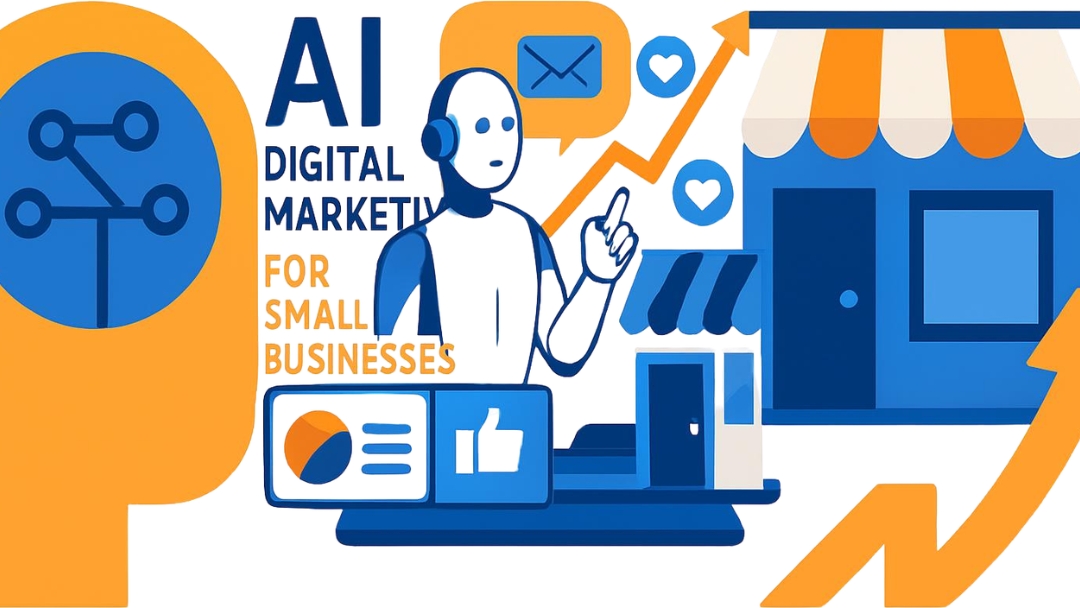
Artificial Intelligence is rapidly transforming the way businesses approach marketing.
What once required large teams, expensive software, and complex data analysis can now be achieved using AI-powered tools that automate marketing tasks and improve decision-making.
For small businesses, this represents an enormous opportunity.
AI allows businesses to work smarter, communicate more effectively with customers, and generate more leads without dramatically increasing marketing budgets.
This guide explains how AI digital marketing works and how businesses can use it to grow faster.
What is AI Digital Marketing?
AI digital marketing refers to the use of Artificial Intelligence technologies to automate and optimise marketing activities.
These technologies analyse large amounts of data, identify patterns, and help businesses make better marketing decisions.
AI can assist with:
Content Creation
• search engine optimisation (SEO)
• email marketing campaigns
• marketing automation
• customer support chatbots
• audience targeting and advertising
Instead of manually analysing marketing results, AI tools provide real-time insights that improve campaign performance.
Why AI is a Game Changer for Small Businesses
In the past, large companies dominated marketing because they had bigger budgets and larger teams.
AI technology is changing that.
Small businesses can now use affordable AI tools to access the same types of marketing intelligence previously reserved for major brands.
Benefits include:
Reduced Marketing Workload
• faster campaign creation
• improved marketing insights
• better customer targeting
• higher marketing efficiency
AI essentially allows small businesses to scale their marketing efforts without increasing staff or costs significantly.
AI and Email Marketing
Email marketing remains one of the most powerful marketing channels available to businesses.
When combined with AI, email marketing becomes even more effective.
AI can help businesses:
Analyse Subscriber Behaviour
• personalise email content
• optimise subject lines
• determine the best time to send campaigns
• identify high-performing email content
This results in higher open rates, more clicks, and more sales.
👉 Related article: Email Marketing for Small Businesses
Building a Valuable Email List
One of the most valuable assets a business can build is a high-quality email subscriber list.
Subscribers represent people who have already shown interest in your business.
Businesses can grow their email lists through:
Website Signup Forms
• downloadable guides
• special offers
• newsletters
• competitions
• event registrations
Over time, these subscribers can become regular customers and brand advocates.
👉 Related article: Why Every Business Needs an Email List
Marketing Automation with AI
Marketing automation allows businesses to run campaigns automatically.
Automation tools can send emails, follow up with enquiries, and deliver marketing messages without manual input.
Examples of automated marketing include:
Welcome Email Sequences
• lead nurturing campaigns
• automated follow-up messages
• promotional campaign scheduling
When AI is integrated into automation systems, campaigns can become more personalised and effective.
👉 Related article: Marketing Automation for Small Businesses
AI Chatbots and Customer Support
Another powerful AI tool for businesses is the website chatbot.
AI chatbots can provide instant responses to visitors, answer common questions, and capture enquiries.
Benefits include:
24/7 Customer Support
• improved website engagement
• faster responses to potential customers
• increased lead generation
Chatbots help ensure that businesses never miss a potential enquiry from their website.
How AI Improves Marketing Decisions
One of the biggest advantages of AI is its ability to analyse large amounts of data quickly.
AI tools can help businesses understand:
Which Marketing Campaigns Perform Best
• what content attracts the most engagement
• when customers are most likely to respond
• which channels generate the most sales
This data-driven approach helps businesses make smarter marketing decisions.
Getting Started with AI Marketing
Businesses interested in AI marketing should begin by focusing on a few key areas:
Website optimisation
Email marketing campaigns
Marketing automation tools
AI-powered analytics
AI chatbots for customer engagement
Starting with these areas allows businesses to quickly experience the benefits of AI-driven marketing.
The Future of AI Marketing
AI technology continues to evolve rapidly.
Over the next few years, AI will play an even bigger role in:
Customer Engagement
• marketing personalisation
• predictive analytics
• automated content creation
• intelligent advertising strategies
Businesses that adopt AI marketing early will gain a strong competitive advantage.
Final Thoughts
AI digital marketing is no longer a futuristic concept — it is already helping businesses improve marketing efficiency, attract customers, and generate sales.
For small businesses especially, AI provides the tools needed to compete in an increasingly digital marketplace.
By combining AI tools, email marketing, marketing automation, and data-driven insights, businesses can build smarter marketing strategies that deliver long-term growth.
FAQs
What is AI digital marketing?
AI digital marketing uses artificial intelligence to automate and improve marketing activities such as email campaigns, data analysis, and customer engagement.
Can small businesses use AI marketing tools?
Yes. Many AI marketing tools are affordable and designed specifically for small businesses.
How does AI improve email marketing?
AI helps optimise subject lines, personalise emails, and identify the best time to send campaigns.
What is marketing automation?
Marketing automation uses software to automatically send emails, follow up with leads, and manage marketing campaigns.
Do AI tools replace human marketers?
No. AI supports marketers by handling repetitive tasks and providing data insights.
by georgecornelius | 3 02 24 | Increase Sales Results
It’s a reality, in any service environment, if those who are providing a reactive service are not successfully selling, wherever and whenever the customer touches the business – the business function of service will die.
The burden of a service cost centre cannot be carried in the business world of today, it has to be paid for and who better to pay for it than those people tasked with its support activity – customer service agents/personnel.
‘No way, impossible, crazy, stupid, we provide customer services, our clients need us to fix their problems and make sure they are happy with their purchase.’ Yes, I totally agree, job well done. However, what better time to ‘up-sell’ or ‘cross sell’ a customer than when they have just been totally satisfied with the quality of the service that you have provided them with.
There was a saying banded around the industry by Peter Drucker I believe, who said ‘If you’re not selling you best be supporting someone who is’, not anymore, if you’re not selling you’re a liability. Everyone from the receptionist, doorman, junior staff all the way to the top is a sales person – period. Everyone is involved in adding emotional value every time a prospect, customer or client touches the business, that emotional value, in turn affects the future financial value. In the competitive and costly business environment of today, the business must ‘Sell or Die within Customer Service’.
The truth is we are all motivated by two things in life, Pain and Pleasure and too many people in a customer service environment see too much pain associated with putting themselves out to learn to sell. Their more pleasurable option is to keep doing what they’re doing, no waves, no change, life is easy, after all, they didn’t take the job to sell – did they?
So get you customer service staff trained in basic sales techniques, in fact get everybody trained, at worst give them a few ‘upsell’ and ‘cross-sell’ skills to add value to your business when a possibility to do so happens.