by georgecornelius | 22 05 26 | Increase Sales Results, Sales Awareness, Sales Channels
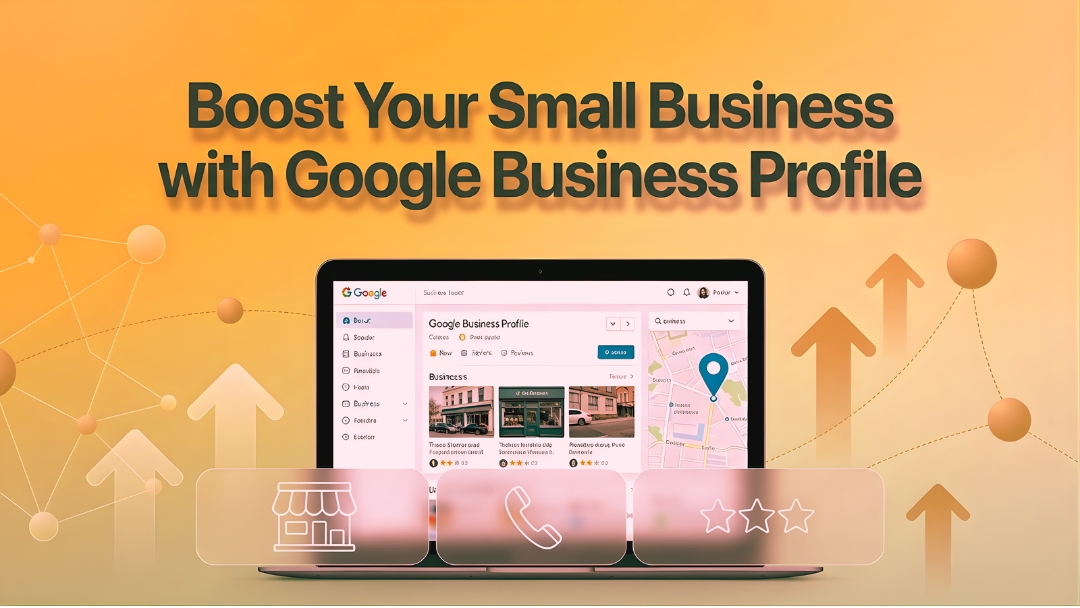
Why Every Small Business Needs a Google Business Profile
If you run a small but growing business, you already know how important it is to be visible, trusted, and easy to contact. Your customers might discover you at events, markets, or through word of mouth, but sooner or later they will search for you online. That moment is where your Google Business Profile can make all the difference.
A Google Business Profile (formerly Google My Business) is a free tool that helps your business appear in Google Search and Google Maps when people are looking for products or services like yours. It gives you control over how your business appears, helps you reach new customers, and supports your growth from a small operation to a thriving enterprise.
Take control of how your business appears online
When someone searches for your business, Google often pulls information from different places. Without a verified profile, this information can be incomplete, out of date, or simply wrong. That can cost you enquiries and sales.
With a Google Business Profile, you can:
- Add and update your business name and description
- List your opening hours, including holidays or seasonal changes
- Share your website link, phone number, and key contact details
- Upload photos of your products, premises, or stand
This gives you control over the first impression people get when they find you in Google. Instead of a half-empty listing, they see a clear, professional profile that reflects who you are and what you offer.
Get found by local customers and new markets
Most small businesses serve a local area, but local does not have to mean limited. Many customers search using terms like “near me” or “local” when they are ready to buy. A well-optimised Google Business Profile helps you appear in those local search results and on Google Maps.
For example, if someone types “handmade gifts near me” or “local artisan food”, your business has a much better chance of appearing when your profile:
- Includes accurate address or service area information
- Uses relevant keywords in the business description
- Features high-quality photos and up-to-date details
This is especially powerful for small, growing businesses that attend markets, fairs, or Cottage Industry events. You are not just discovered at the event itself – you remain discoverable long after, by people in your area and by those planning a visit.
Build trust and credibility with your audience
Trust is everything for a small business. Customers want to know you are real, reliable, and easy to contact. A complete Google Business Profile helps build that trust before they even speak to you.
By adding:
- A clear logo and brand image
- Genuine photos of your products, stall, studio, or shop
- A well-written description of who you are and what you do
you create a digital shopfront that feels personal and professional. When people see a polished, verified profile, they are far more likely to click through, call you, or visit in person.
Make it simple for people to contact you
Small businesses thrive when it is easy for customers to get in touch. Your Google Business Profile brings together your key contact options in one place, so people do not have to hunt around.
From your profile, customers can:
- Tap to call you directly from their phone
- Click through to your website or online shop
- Get directions to your location via Google Maps
- Ask questions via the Q&A feature
These small details remove friction. If someone is deciding between you and another business, the one that makes it easiest to get in touch often wins.
Use reviews to encourage more sales
Online reviews are now one of the most influential factors in buying decisions. For a small, growing business, they are the digital version of word-of-mouth recommendations.
With a Google Business Profile you can:
- Invite happy customers to leave a review
- Respond to reviews and show you care about feedback
- Build a visible track record of good service
Potential customers can see real comments from real people, which reassures them that you deliver on your promises. Over time, a steady flow of positive reviews can significantly boost your reputation and your search visibility.
How to set up your Google Business Profile
Setting up a Google Business Profile is straightforward, and once it is in place, it becomes a powerful asset for your small business. Here is a simple step-by-step guide:
- Visit the Google Business site and sign in with your Google account.
- Enter your business name and choose the most relevant business category.
- Add your location if customers visit you in person, or define your service area if you travel to them.
- Include your phone number, website address, and any key contact details.
- Upload photos that represent your business well.
- Request verification (this is usually done by post, email, or phone, depending on what Google offers you).
Once verified, you can log in at any time to update your details, add new photos, share posts, or respond to reviews. Treat it as a living part of your marketing, not a “set and forget” task.
For small businesses looking to grow, being visible, credible, and easy to contact is essential. A Google Business Profile gives you those building blocks without needing a big budget or complicated technology. When you combine that profile with your existing relationship with CIA and automatic inclusion in the BCIA community, you are in a strong position to turn online searches into loyal customers and long-term growth.
If you have not yet created or fully updated your Google Business Profile, now is the perfect time. Make sure your business can be found, trusted, and contacted – and let your online presence support the next stage of your growth journey.
by georgecornelius | 28 04 26 | Ai, Increase Sales Results
Marketing automation is one of the most powerful tools available to modern businesses.
It allows businesses to automate repetitive marketing tasks while maintaining regular communication with customers.
This saves time and improves efficiency.
What is Marketing Automation?
Marketing automation uses software and AI tools to automatically perform marketing tasks.
Examples include:
- sending email sequences
- scheduling social media posts
- capturing leads from websites
- sending follow-up emails
- tracking customer behaviour
How Automation Saves Time
Without automation, businesses must manually send emails, respond to enquiries, and track marketing results.
Automation tools handle these processes automatically.
This allows business owners to focus on strategy and growth.
Automation Improves Customer Experience
Automation ensures customers receive:
- fast responses
- personalised messages
- timely follow-ups
This improves engagement and increases the likelihood of converting leads into customers.
AI and Automation Together
AI-powered automation tools can now analyse behaviour and adjust marketing campaigns automatically.
This means businesses can deliver smarter and more effective marketing without manual effort.
Final Thoughts
Marketing automation is no longer just for large companies.
Today, small businesses can use affordable automation tools to streamline marketing and generate consistent leads.
FAQs
What is marketing automation?
Marketing automation uses software to automatically run marketing tasks and campaigns.
Is automation suitable for small businesses?
Yes. Many automation tools are designed specifically for small businesses.
What tasks can automation handle?
Email campaigns, follow-ups, lead capture, and social media scheduling.
Does automation replace human marketing?
No. It supports marketers by handling repetitive tasks.
Is marketing automation expensive?
Many tools offer affordable plans suitable for small businesses.

by georgecornelius | 17 04 26 | Ai, Email Marketing
In digital marketing, one asset stands above almost everything else: your email list.
Unlike social media followers, which are controlled by platform algorithms, an email list gives businesses direct communication with their audience.
This makes email lists incredibly valuable for long-term growth.
Email Lists Build Strong Relationships
An email list allows businesses to communicate regularly with their audience.
Businesses Can Share:
Updates
• promotions
• helpful information
• product launches
• event announcements
This keeps the business visible and builds trust over time.
Your Email List Is a Marketing Asset
Every new subscriber increases the value of your marketing reach.
For example:
A business with 1,000 subscribers can generate regular traffic and sales simply by sending useful emails.
As the list grows, so does the potential revenue.
Ways to Grow Your Email List
Businesses can grow their email lists through:
- website signup forms
- downloadable guides
- exclusive offers
- event registrations
- newsletters
- competitions
Providing something valuable encourages people to subscribe.
Final Thoughts
An email list is one of the most powerful and valuable assets a business can build.
It creates a direct connection with customers and allows businesses to generate consistent traffic and sales.
FAQs
Why is an email list important for businesses?
It allows businesses to communicate directly with customers without relying on social media algorithms.
How fast can an email list grow?
With the right incentives and website forms, lists can grow steadily every month.
What should businesses send to subscribers?
Helpful information, updates, promotions, and valuable content.
Are email lists still effective in 2026?
Yes. Email marketing remains one of the highest ROI marketing channels.
How often should emails be sent?
Most businesses send newsletters once or twice per month.
by georgecornelius | 1 04 26 | Ai, Email Marketing
AI in Digital Marketing: The Future of Business Growth
Artificial Intelligence is rapidly transforming the digital marketing landscape. What once required large marketing teams and significant budgets can now be achieved with powerful AI tools.
For small businesses, this represents an incredible opportunity to compete with much larger companies.
AI allows businesses to automate tasks, analyse customer behaviour, personalise marketing messages, and improve decision-making — all while saving time and resources.
What AI Can Do for Digital Marketing
AI can support many areas of marketing, including:
Conent Creation
• search engine optimisation (SEO)
• email marketing campaigns
• social media management
• customer service chatbots
• data analysis and insights
By using AI, businesses can work more efficiently and focus their energy on strategy and growth.
AI Makes Marketing Smarter
One of the biggest advantages of AI is its ability to analyse large amounts of data quickly.
This allows businesses to understand:
what content performs best
which campaigns generate sales
when customers are most active
what messaging attracts the most engagement
These insights help businesses make smarter marketing decisions.
AI Levels the Playing Field
In the past, large companies had a major advantage because they had bigger marketing budgets.
Today, AI tools allow small businesses to access the same type of marketing technology used by large corporations.
This creates a much more level playing field.
Final Thoughts
AI is not replacing marketers — it is supporting them.
Businesses that embrace AI-powered marketing tools will be able to:
save time
improve marketing performance
attract more customers
grow faster
AI is becoming an essential part of modern business.
FAQs
What is AI in digital marketing?
AI in digital marketing refers to using artificial intelligence tools to automate marketing tasks and analyse customer behaviour.
Can small businesses benefit from AI marketing?
Yes. AI tools make advanced marketing strategies accessible and affordable for small businesses.
Does AI replace marketers?
No. AI supports marketers by automating repetitive tasks and providing insights.
Is AI expensive to implement?
Many AI marketing tools are affordable and scalable for small businesses.
What marketing tasks can AI automate?
AI can automate email campaigns, content creation, customer responses, and data analysis.
Email Marketing, Build An Email List, Small Business Marketing, Digital Marketing, Marketing Strategy
by georgecornelius | 19 03 26 | Ai, Increase Sales Results
The Complete Guide
Artificial Intelligence is rapidly transforming the way businesses approach marketing.
What once required large teams, expensive software, and complex data analysis can now be achieved using AI-powered tools that automate marketing tasks and improve decision-making.
For small businesses, this represents an enormous opportunity.
AI allows businesses to work smarter, communicate more effectively with customers, and generate more leads without dramatically increasing marketing budgets.
This guide explains how AI digital marketing works and how businesses can use it to grow faster.
What is AI Digital Marketing?
AI digital marketing refers to the use of Artificial Intelligence technologies to automate and optimise marketing activities.
These technologies analyse large amounts of data, identify patterns, and help businesses make better marketing decisions.
AI can assist with:
Content Creation
• search engine optimisation (SEO)
• email marketing campaigns
• marketing automation
• customer support chatbots
• audience targeting and advertising
Instead of manually analysing marketing results, AI tools provide real-time insights that improve campaign performance.
Why AI is a Game Changer for Small Businesses
In the past, large companies dominated marketing because they had bigger budgets and larger teams.
AI technology is changing that.
Small businesses can now use affordable AI tools to access the same types of marketing intelligence previously reserved for major brands.
Benefits include:
Reduced Marketing Workload
• faster campaign creation
• improved marketing insights
• better customer targeting
• higher marketing efficiency
AI essentially allows small businesses to scale their marketing efforts without increasing staff or costs significantly.
AI and Email Marketing
Email marketing remains one of the most powerful marketing channels available to businesses.
When combined with AI, email marketing becomes even more effective.
AI can help businesses:
Analyse Subscriber Behaviour
• personalise email content
• optimise subject lines
• determine the best time to send campaigns
• identify high-performing email content
This results in higher open rates, more clicks, and more sales.
👉 Related article: Email Marketing for Small Businesses
Building a Valuable Email List
One of the most valuable assets a business can build is a high-quality email subscriber list.
Subscribers represent people who have already shown interest in your business.
Businesses can grow their email lists through:
Website Signup Forms
• downloadable guides
• special offers
• newsletters
• competitions
• event registrations
Over time, these subscribers can become regular customers and brand advocates.
👉 Related article: Why Every Business Needs an Email List
Marketing Automation with AI
Marketing automation allows businesses to run campaigns automatically.
Automation tools can send emails, follow up with enquiries, and deliver marketing messages without manual input.
Examples of automated marketing include:
Welcome Email Sequences
• lead nurturing campaigns
• automated follow-up messages
• promotional campaign scheduling
When AI is integrated into automation systems, campaigns can become more personalised and effective.
👉 Related article: Marketing Automation for Small Businesses
AI Chatbots and Customer Support
Another powerful AI tool for businesses is the website chatbot.
AI chatbots can provide instant responses to visitors, answer common questions, and capture enquiries.
Benefits include:
24/7 Customer Support
• improved website engagement
• faster responses to potential customers
• increased lead generation
Chatbots help ensure that businesses never miss a potential enquiry from their website.
How AI Improves Marketing Decisions
One of the biggest advantages of AI is its ability to analyse large amounts of data quickly.
AI tools can help businesses understand:
Which Marketing Campaigns Perform Best
• what content attracts the most engagement
• when customers are most likely to respond
• which channels generate the most sales
This data-driven approach helps businesses make smarter marketing decisions.
Getting Started with AI Marketing
Businesses interested in AI marketing should begin by focusing on a few key areas:
Website optimisation
Email marketing campaigns
Marketing automation tools
AI-powered analytics
AI chatbots for customer engagement
Starting with these areas allows businesses to quickly experience the benefits of AI-driven marketing.
The Future of AI Marketing
AI technology continues to evolve rapidly.
Over the next few years, AI will play an even bigger role in:
Customer Engagement
• marketing personalisation
• predictive analytics
• automated content creation
• intelligent advertising strategies
Businesses that adopt AI marketing early will gain a strong competitive advantage.
Final Thoughts
AI digital marketing is no longer a futuristic concept — it is already helping businesses improve marketing efficiency, attract customers, and generate sales.
For small businesses especially, AI provides the tools needed to compete in an increasingly digital marketplace.
By combining AI tools, email marketing, marketing automation, and data-driven insights, businesses can build smarter marketing strategies that deliver long-term growth.
FAQs
What is AI digital marketing?
AI digital marketing uses artificial intelligence to automate and improve marketing activities such as email campaigns, data analysis, and customer engagement.
Can small businesses use AI marketing tools?
Yes. Many AI marketing tools are affordable and designed specifically for small businesses.
How does AI improve email marketing?
AI helps optimise subject lines, personalise emails, and identify the best time to send campaigns.
What is marketing automation?
Marketing automation uses software to automatically send emails, follow up with leads, and manage marketing campaigns.
Do AI tools replace human marketers?
No. AI supports marketers by handling repetitive tasks and providing data insights.