
by georgecornelius | 17 04 26 | Ai, Email Marketing
In digital marketing, one asset stands above almost everything else: your email list.
Unlike social media followers, which are controlled by platform algorithms, an email list gives businesses direct communication with their audience.
This makes email lists incredibly valuable for long-term growth.
Email Lists Build Strong Relationships
An email list allows businesses to communicate regularly with their audience.
Businesses Can Share:
Updates
• promotions
• helpful information
• product launches
• event announcements
This keeps the business visible and builds trust over time.
Your Email List Is a Marketing Asset
Every new subscriber increases the value of your marketing reach.
For example:
A business with 1,000 subscribers can generate regular traffic and sales simply by sending useful emails.
As the list grows, so does the potential revenue.
Ways to Grow Your Email List
Businesses can grow their email lists through:
- website signup forms
- downloadable guides
- exclusive offers
- event registrations
- newsletters
- competitions
Providing something valuable encourages people to subscribe.
Final Thoughts
An email list is one of the most powerful and valuable assets a business can build.
It creates a direct connection with customers and allows businesses to generate consistent traffic and sales.
FAQs
Why is an email list important for businesses?
It allows businesses to communicate directly with customers without relying on social media algorithms.
How fast can an email list grow?
With the right incentives and website forms, lists can grow steadily every month.
What should businesses send to subscribers?
Helpful information, updates, promotions, and valuable content.
Are email lists still effective in 2026?
Yes. Email marketing remains one of the highest ROI marketing channels.
How often should emails be sent?
Most businesses send newsletters once or twice per month.
by georgecornelius | 1 04 26 | Ai, Email Marketing
AI in Digital Marketing: The Future of Business Growth
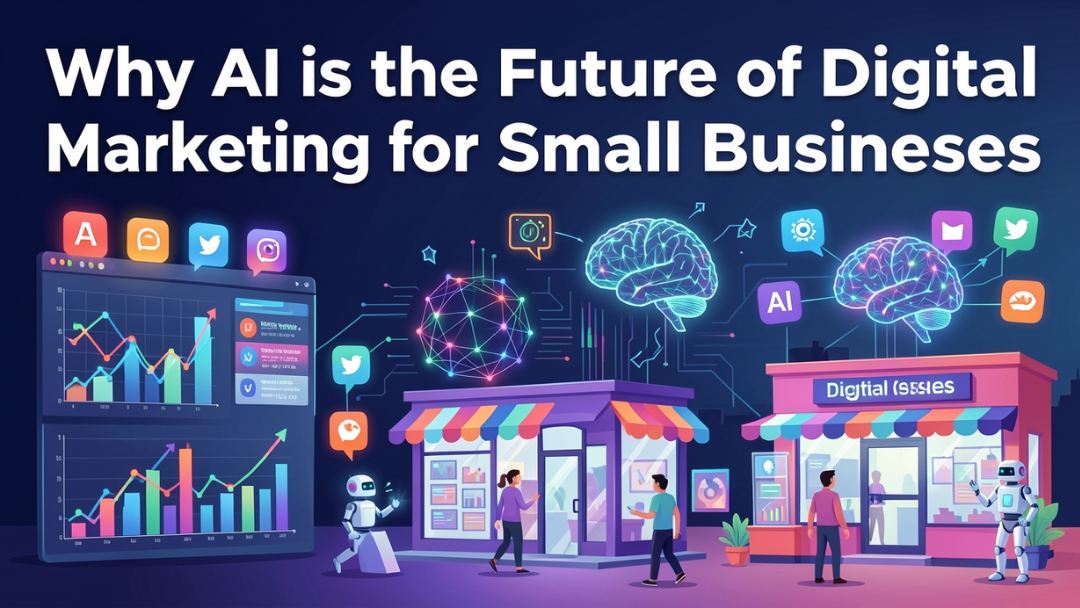
Artificial Intelligence is rapidly transforming the digital marketing landscape. What once required large marketing teams and significant budgets can now be achieved with powerful AI tools.
For small businesses, this represents an incredible opportunity to compete with much larger companies.
AI allows businesses to automate tasks, analyse customer behaviour, personalise marketing messages, and improve decision-making — all while saving time and resources.
What AI Can Do for Digital Marketing
AI can support many areas of marketing, including:
Conent Creation
• search engine optimisation (SEO)
• email marketing campaigns
• social media management
• customer service chatbots
• data analysis and insights
By using AI, businesses can work more efficiently and focus their energy on strategy and growth.
AI Makes Marketing Smarter
One of the biggest advantages of AI is its ability to analyse large amounts of data quickly.
This allows businesses to understand:
what content performs best
which campaigns generate sales
when customers are most active
what messaging attracts the most engagement
These insights help businesses make smarter marketing decisions.
AI Levels the Playing Field
In the past, large companies had a major advantage because they had bigger marketing budgets.
Today, AI tools allow small businesses to access the same type of marketing technology used by large corporations.
This creates a much more level playing field.
Final Thoughts
AI is not replacing marketers — it is supporting them.
Businesses that embrace AI-powered marketing tools will be able to:
save time
improve marketing performance
attract more customers
grow faster
AI is becoming an essential part of modern business.
FAQs
What is AI in digital marketing?
AI in digital marketing refers to using artificial intelligence tools to automate marketing tasks and analyse customer behaviour.
Can small businesses benefit from AI marketing?
Yes. AI tools make advanced marketing strategies accessible and affordable for small businesses.
Does AI replace marketers?
No. AI supports marketers by automating repetitive tasks and providing insights.
Is AI expensive to implement?
Many AI marketing tools are affordable and scalable for small businesses.
What marketing tasks can AI automate?
AI can automate email campaigns, content creation, customer responses, and data analysis.
Email Marketing, Build An Email List, Small Business Marketing, Digital Marketing, Marketing Strategy
by georgecornelius | 6 03 26 | Email Marketing
Email Marketing for Small Businesses: How Emails Turn Into Sales
Email marketing continues to deliver one of the highest returns in digital marketing.
While many businesses focus heavily on social media and advertising, email marketing continues to deliver one of the highest returns in digital marketing.
For small businesses especially, email marketing provides a direct and reliable way to communicate with customers, promote services, and generate sales without large advertising budgets.
Unlike social media platforms where visibility depends on algorithms, email marketing gives businesses direct access to their audience’s inbox.
This makes it one of the most valuable long-term marketing assets a company can build.
Why Email Marketing Has One of the Highest ROIs
Studies consistently show that email marketing delivers one of the strongest returns on investment in digital marketing.
On average:
- £1 spent on email marketing generates £36–£42 in revenue
- Email campaigns reach people who already know your brand
- Engagement levels are typically higher than social media marketing
Typical email marketing performance looks like this:
| Metric |
Typical Result |
| Open Rate |
25–40% |
| Click Rate |
3–8% |
| Conversion Rate |
1–5% |
Even modest engagement numbers can generate significant sales when campaigns are run consistently.
The Email Marketing Sales Funnel Explained
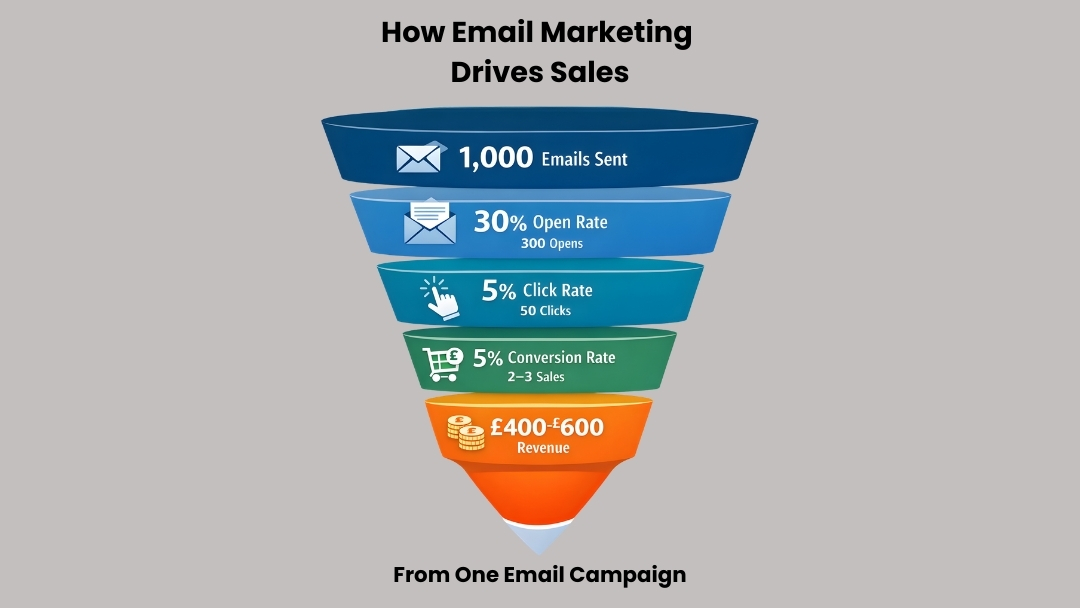
To understand how email marketing drives revenue, let’s look at a simple example.
Imagine a business sends a campaign to 1,000 subscribers.
Step 1 – Emails Sent
1,000 people receive the email campaign.
Step 2 – Email Opens
If 30% open the email, that means 300 people read the message.
Step 3 – Clicks to Your Website
If 5% click the link, around 50 people visit your website or landing page.
Step 4 – Sales or Enquiries
If 5% of visitors convert, this generates 2–3 sales.
If your average sale is £200, that single email campaign could generate: £400 – £600 in revenue
With two emails per month, the annual potential becomes: £9,600 – £14,400 from a list of just 1,000 subscribers.
This demonstrates why email marketing is such a powerful sales channel.
How AI Is Improving Email Marketing Performance
Artificial Intelligence is now transforming email marketing strategies.
AI tools help businesses:
- analyse subscriber behaviour
- identify the best times to send emails
- create optimised subject lines
- personalise email content
- predict which campaigns will perform best
This means businesses can send smarter emails that generate higher engagement and more conversions.
AI also reduces the time required to plan and manage campaigns, allowing businesses to focus more on growth.
How to Build an Effective Email Marketing Strategy
To maximise results, businesses should focus on several key principles.
Build a Quality Email List
Encourage visitors to subscribe through website forms, downloadable guides, or special offers.
Send Useful and Engaging Content
Emails should provide value, whether through helpful tips, industry insights, or exclusive promotions.
Include Clear Calls to Action
Encourage readers to click through to your website, enquire about services, or explore offers.
Monitor Campaign Performance
Tracking open rates, click rates, and conversions allows businesses to refine their strategy over time.
Use AI Marketing Tools
AI tools can automate many tasks and help optimise campaign performance.
Why Every Business Should Use Email Marketing
Email marketing offers several advantages that few other marketing channels can match.
Benefits include:
direct communication with customers
measurable results
low marketing costs
strong return on investment
increased repeat business
Businesses that consistently communicate with their audience often build stronger relationships and higher customer loyalty.
Final Thoughts
Email marketing remains one of the most effective digital marketing tools available today.
Even small subscriber lists can produce significant revenue when campaigns are well planned and sent regularly.
When combined with AI-powered marketing tools, email marketing becomes even more powerful — helping businesses save time while generating more enquiries and sales.
For businesses looking to grow online, email marketing should be a key part of their digital marketing strategy.
FAQs
What is the average ROI for email marketing?
Email marketing typically generates £36–£42 for every £1 spent, making it one of the highest-return marketing channels.
Is email marketing good for small businesses?
Yes. Email marketing is affordable, measurable, and allows small businesses to communicate directly with customers.
How large should an email list be?
Even a list of 500–1,000 subscribers can generate meaningful sales when campaigns are sent consistently.
How often should businesses send emails?
Most businesses send campaigns 1–4 times per month depending on their audience and content.
Can AI improve email marketing campaigns?
Yes. AI can optimise subject lines, personalise emails, analyse performance, and improve overall campaign results.