
Email Marketing for Small Businesses: How Emails Turn Into Sales
Email marketing continues to deliver one of the highest returns in digital marketing.
While many businesses focus heavily on social media and advertising, email marketing continues to deliver one of the highest returns in digital marketing.
For small businesses especially, email marketing provides a direct and reliable way to communicate with customers, promote services, and generate sales without large advertising budgets.
Unlike social media platforms where visibility depends on algorithms, email marketing gives businesses direct access to their audience’s inbox.
This makes it one of the most valuable long-term marketing assets a company can build.
Why Email Marketing Has One of the Highest ROIs
Studies consistently show that email marketing delivers one of the strongest returns on investment in digital marketing.
On average:
- £1 spent on email marketing generates £36–£42 in revenue
- Email campaigns reach people who already know your brand
- Engagement levels are typically higher than social media marketing
Typical email marketing performance looks like this:
| Metric | Typical Result |
| Open Rate | 25–40% |
| Click Rate | 3–8% |
| Conversion Rate | 1–5% |
Even modest engagement numbers can generate significant sales when campaigns are run consistently.
The Email Marketing Sales Funnel Explained
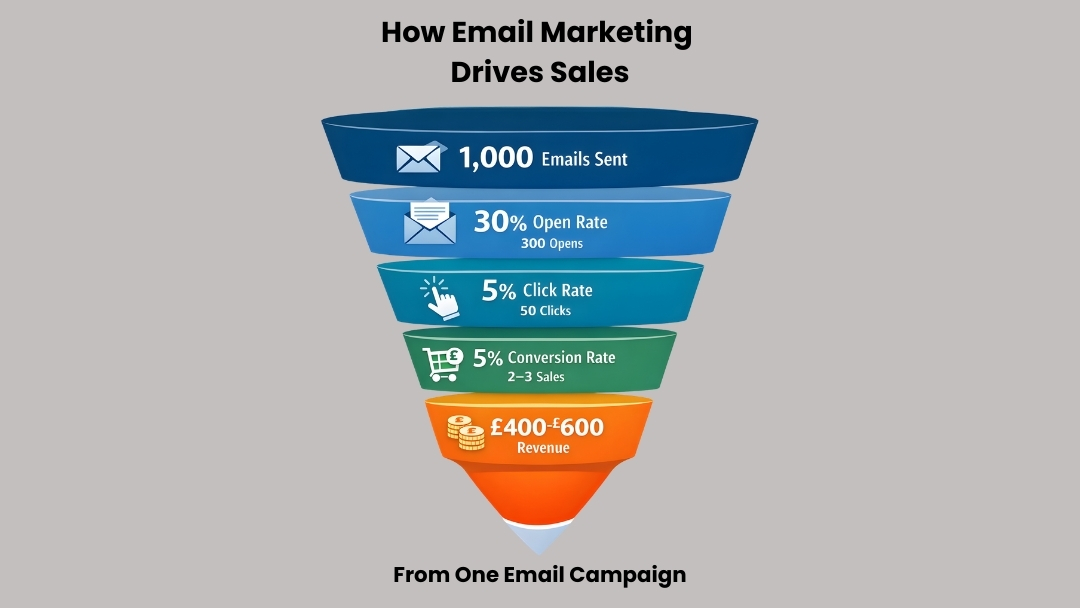
To understand how email marketing drives revenue, let’s look at a simple example.
Imagine a business sends a campaign to 1,000 subscribers.
Step 1 – Emails Sent
1,000 people receive the email campaign.
Step 2 – Email Opens
If 30% open the email, that means 300 people read the message.
Step 3 – Clicks to Your Website
If 5% click the link, around 50 people visit your website or landing page.
Step 4 – Sales or Enquiries
If 5% of visitors convert, this generates 2–3 sales.
If your average sale is £200, that single email campaign could generate: £400 – £600 in revenue
With two emails per month, the annual potential becomes: £9,600 – £14,400 from a list of just 1,000 subscribers.
This demonstrates why email marketing is such a powerful sales channel.
How AI Is Improving Email Marketing Performance
Artificial Intelligence is now transforming email marketing strategies.
AI tools help businesses:
- analyse subscriber behaviour
- identify the best times to send emails
- create optimised subject lines
- personalise email content
- predict which campaigns will perform best
This means businesses can send smarter emails that generate higher engagement and more conversions.
AI also reduces the time required to plan and manage campaigns, allowing businesses to focus more on growth.
How to Build an Effective Email Marketing Strategy
To maximise results, businesses should focus on several key principles.
Build a Quality Email List
Encourage visitors to subscribe through website forms, downloadable guides, or special offers.
Send Useful and Engaging Content
Emails should provide value, whether through helpful tips, industry insights, or exclusive promotions.
Include Clear Calls to Action
Encourage readers to click through to your website, enquire about services, or explore offers.
Monitor Campaign Performance
Tracking open rates, click rates, and conversions allows businesses to refine their strategy over time.
Use AI Marketing Tools
AI tools can automate many tasks and help optimise campaign performance.
Why Every Business Should Use Email Marketing
Email marketing offers several advantages that few other marketing channels can match.
Benefits include:
direct communication with customers
measurable results
low marketing costs
strong return on investment
increased repeat business
Businesses that consistently communicate with their audience often build stronger relationships and higher customer loyalty.
Final Thoughts
Email marketing remains one of the most effective digital marketing tools available today.
Even small subscriber lists can produce significant revenue when campaigns are well planned and sent regularly.
When combined with AI-powered marketing tools, email marketing becomes even more powerful — helping businesses save time while generating more enquiries and sales.
For businesses looking to grow online, email marketing should be a key part of their digital marketing strategy.
FAQs
What is the average ROI for email marketing?
Email marketing typically generates £36–£42 for every £1 spent, making it one of the highest-return marketing channels.
Is email marketing good for small businesses?
Yes. Email marketing is affordable, measurable, and allows small businesses to communicate directly with customers.
How large should an email list be?
Even a list of 500–1,000 subscribers can generate meaningful sales when campaigns are sent consistently.
How often should businesses send emails?
Most businesses send campaigns 1–4 times per month depending on their audience and content.
Can AI improve email marketing campaigns?
Yes. AI can optimise subject lines, personalise emails, analyse performance, and improve overall campaign results.